
During the quarantine, the world became convinced that without distance and online education, modern education seems impossible. Progressive countries immediately went online after the announcement of the pandemic. Foreign schools are more adapted to changes, teachers and students are used to mixed learning. But for Ukraine, the transition of school education to online appeared to be quite a challenge. Many schools were not adapted to distance learning. Moreover, on the market of online education in Ukraine, there were quite a few platforms that would help the participants of the educational process to study subjects according to the school curriculum online.
Nataliya Limonova is the founder of GIOS, an interactive online school for studying mathematics the article will tell how the pandemic affected education; how the world’s schools switched to distance learning; how Ukrainian schools reacted to changes in education during the quarantine and what awaits Ukrainian education in the future.
The pandemic has affected the education system around the world, leading to mass closures of schools and universities. As of March 20, 2020, governments in 135 countries have announced or implemented school closures, including 124 countries that have closed schools nationwide and 11 countries that have closed schools only in some regions. School closures across the country affected more than 1.254 billion students worldwide (72.9% of the world’s students).
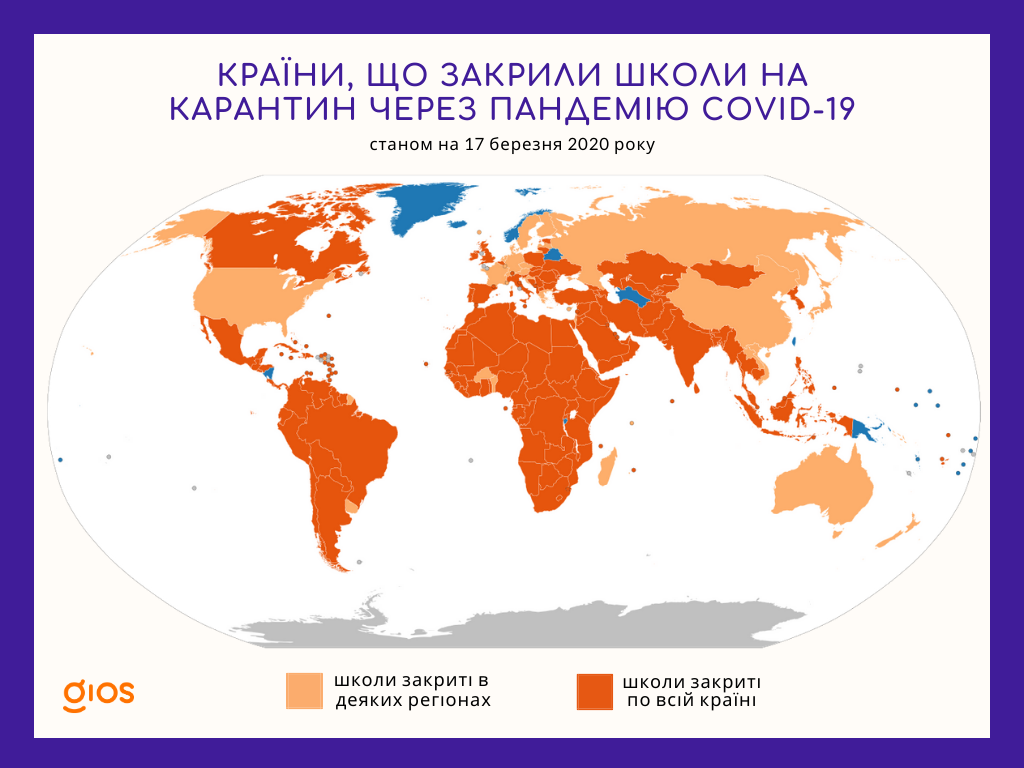
The process of ending education in schools did not bypass Ukraine either. On March 11, the authorities officially declared quarantine and closed educational institutions throughout the country. In most developed countries of the world, there are special state organizations that regulate the process of distance and online education. But what should teachers and students who find themselves in such a situation do in our country?
According to research on computer literacy of teachers conducted in 2018-2019, only 12-14% of teachers confidently worked in the online environment. Only half of the teachers agreed that they have at least elementary knowledge of computer literacy. And the rest… And with such “baggage” Ukrainian schools had to switch to distance learning.

After the announcement of the quarantine, schools began to look for auxiliary platforms for the organization of distance online learning. One such platform is an interactive platform for learning mathematics GIOS. Understanding the confusion of teachers and parents whose children stopped attending educational institutions, the GIOS team decided to provide free access to the platform to all interested schools in the country during the quarantine. The platform’s interface is convenient for organizing distance learning – teachers develop a curriculum, choose the topic they need to study on the platform, and provide it to children. Students, in turn, watch video lessons, perform interesting interactive tasks, and receive points. The teacher views the statistics of the subjects that the students pass and the points they received on the dashboard. The system performs evaluation independently, which greatly facilitates the work of the teacher.
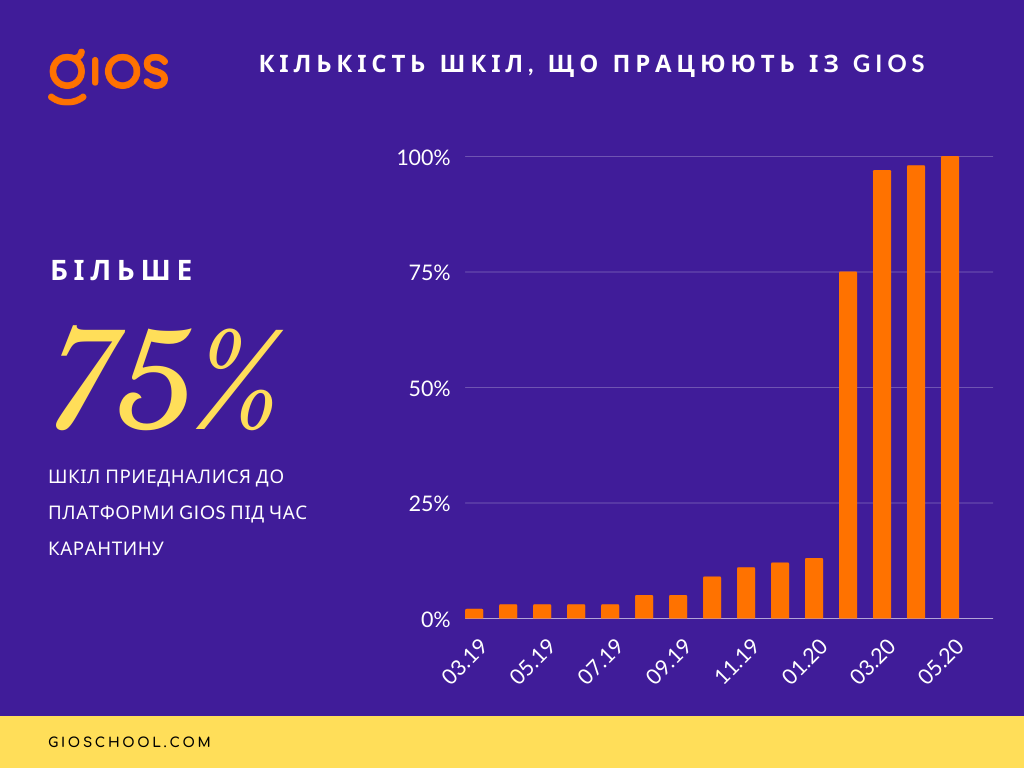
The move to distance education has introduced many teachers to the new world of online learning. During the quarantine, the demand for online education increased many times, as evidenced by the number of users who joined GIOS. Currently, about 2,000 schools throughout Ukraine cooperate with the platform, which is 20 times more than the statistics before the quarantine. If we take 2,000 schools as 100%, we can see that most of them (75%) joined the platform during the quarantine.
Having analyzed the demand for online courses of the GIOS platform, it can be said that the following regions of Ukraine overcome the most difficulties in the transition to remote schooling: Kyiv region (268 schools connected to GIOS), Poltava region (138), Kherson region (141), Dnipropetrovsk region (148), Lviv region (159), Donetsk region (127).
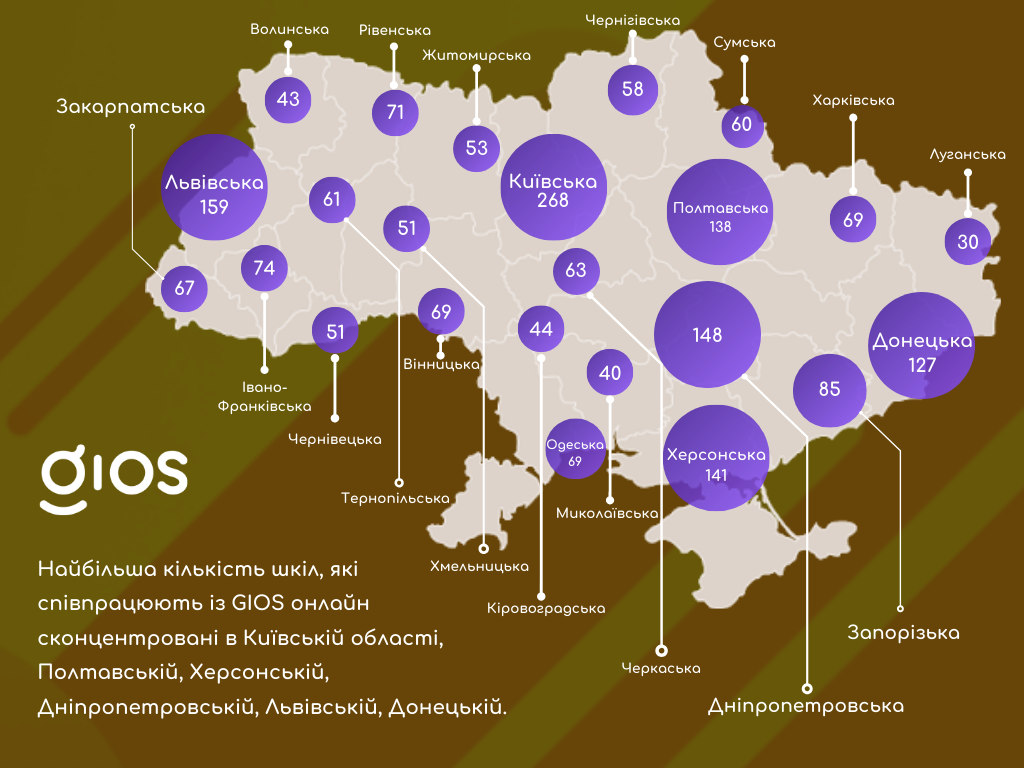
Teachers in the regions of Ukraine connect to the online platform unevenly. Analyzing this trend, we see that the process of transition from traditional education to online education or blended learning is very slow. A number of factors affect this:
But it was the forced transition to distance learning that forced teachers to turn to online learning. Today, about 3,000 teachers teach on the platform, 100,000 students have received free access to materials, and 32,000 children are studying on the platform.
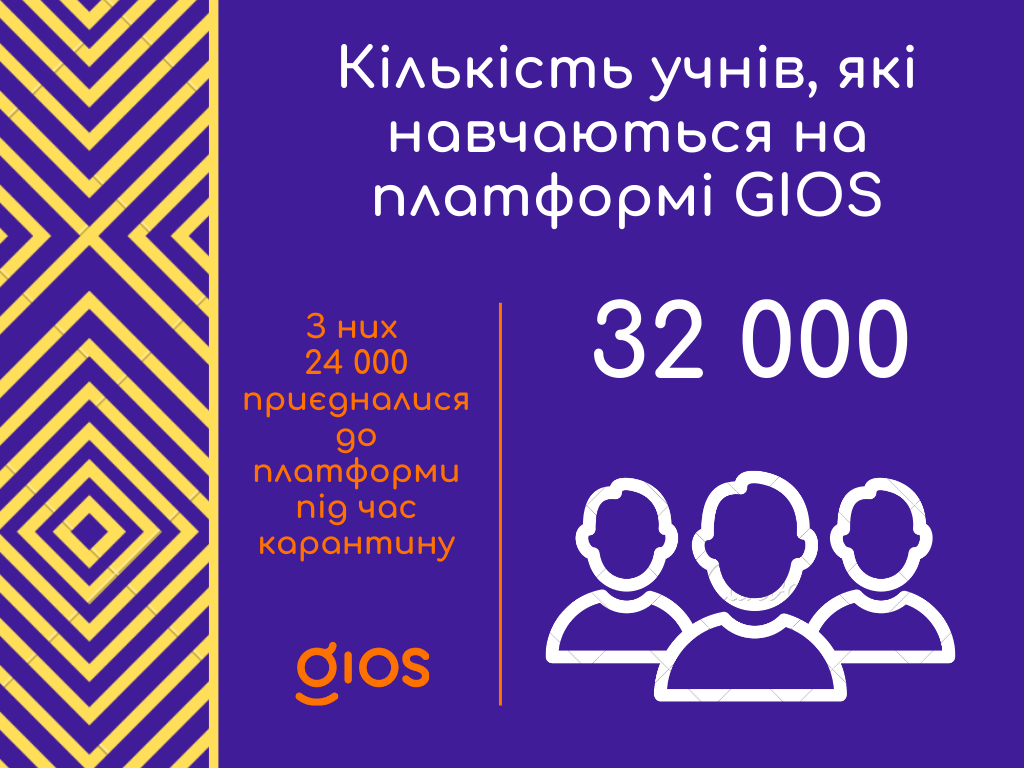
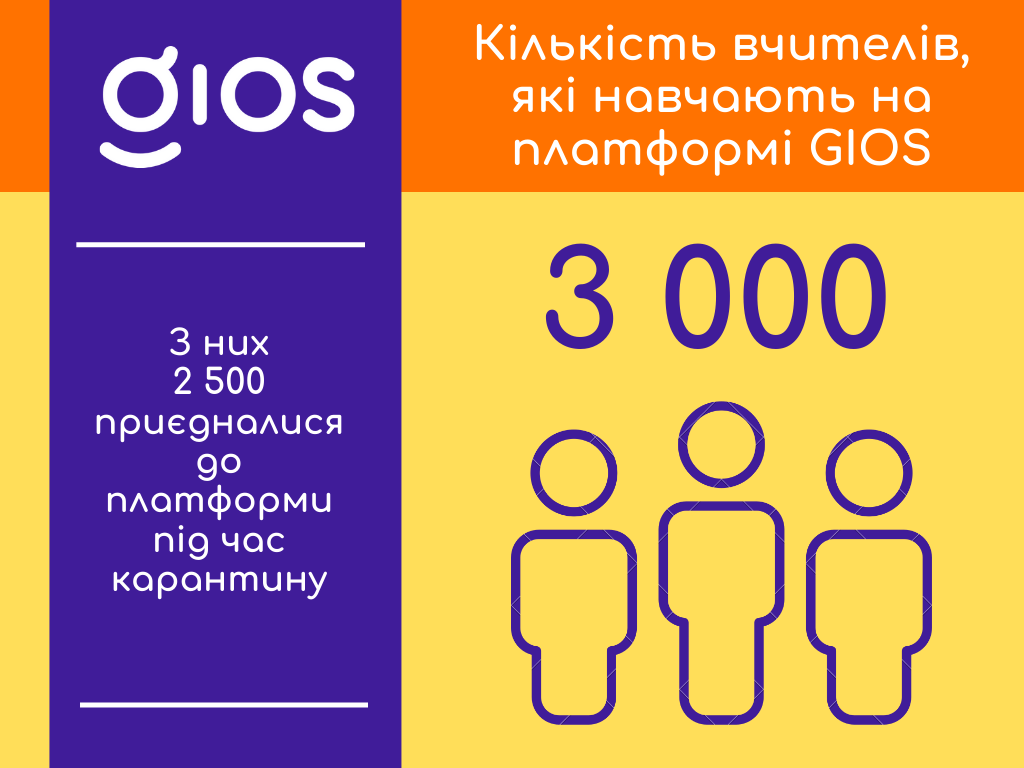
Despite the factors that inhibit the process of introducing online learning in schools, teachers join the GIOS platform and enroll students, stimulating them to study in a new format.
The quarantine will end, and the changes in education that occurred during the forced transition to distance learning will remain. Blended learning is becoming increasingly popular. And most schools will start using blended learning technology in the new school year.
The advantages of blended learning over purely online learning are that the teacher can always help, identify gaps, explain what was not understood, track the dynamics and guide the student in the right direction.
Blended learning makes it possible to make the learning process more individualized or personally oriented, as it allows students to acquire knowledge at their own pace, at a convenient time and in a comfortable place.
At GIOS, we are committed to making it possible for everyone to experience the benefits of blended learning. Online math lessons include interesting theory and applied gamified tasks, deciding which students get points. The platform performs the assessment independently, and the results are displayed in the teacher’s personal account, which greatly simplifies the role of the teacher in the educational process, but does not reduce it. GIOS offers a special promotion for schools.
The GIOS online math learning platform helps not only to learn math, but to love it and get a pleasant experience! This is evidenced by the reviews left by our favorite users.
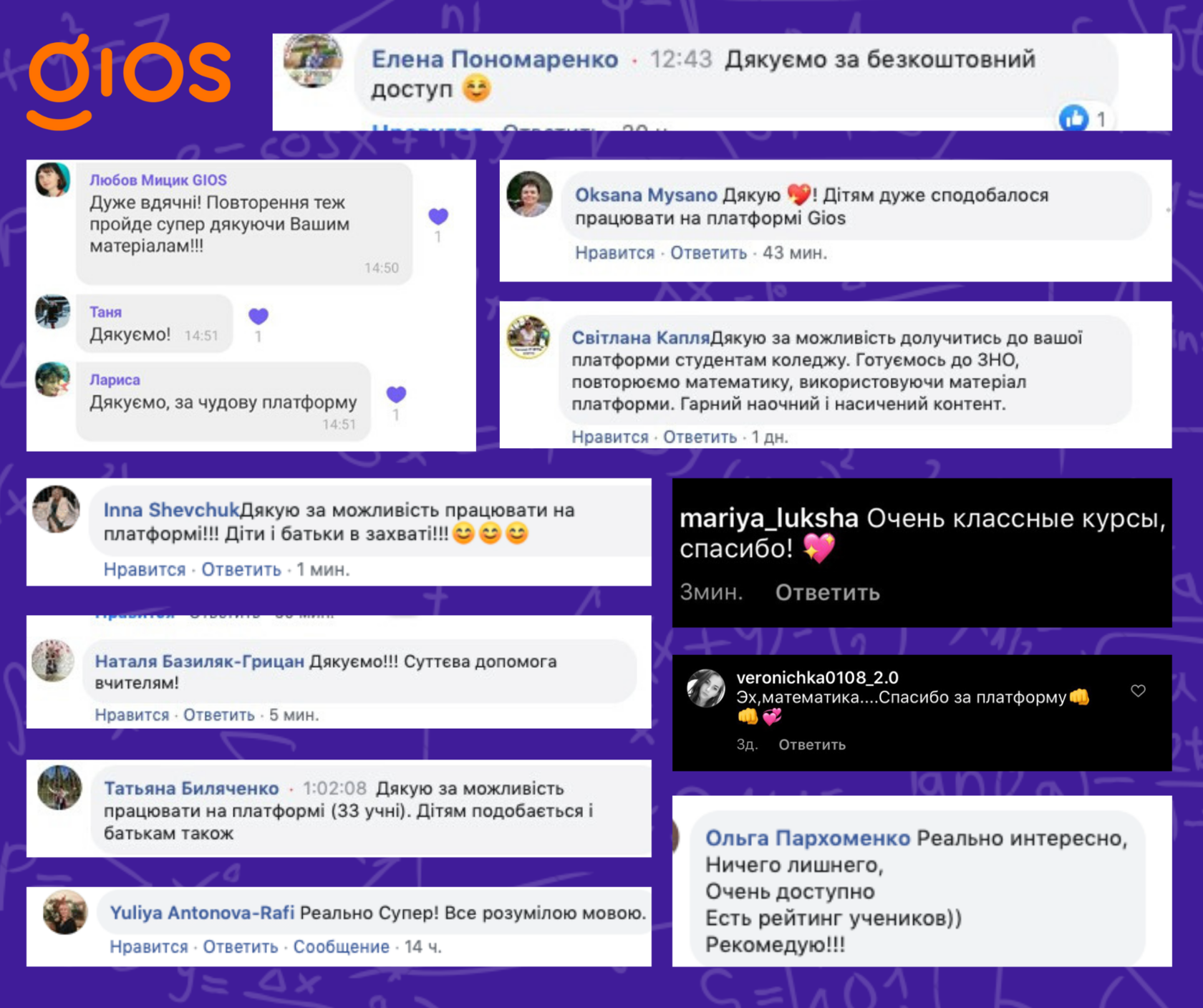
After the end of the quarantine, the main thing is not to lose motivation and thirst for learning! The GIOS platform launches an online camp for students, the purpose of which is to consolidate, repeat and generalize knowledge of mathematics, prepare the child for the new school year and have fun, interestingly and usefully spend time together in small mini-groups with other students and a mentor teacher.