
Imagine two different classrooms.
In the first one, a teacher sees only a student’s final grade — for example, 7 out of 12.
In the second, the teacher sees much more:
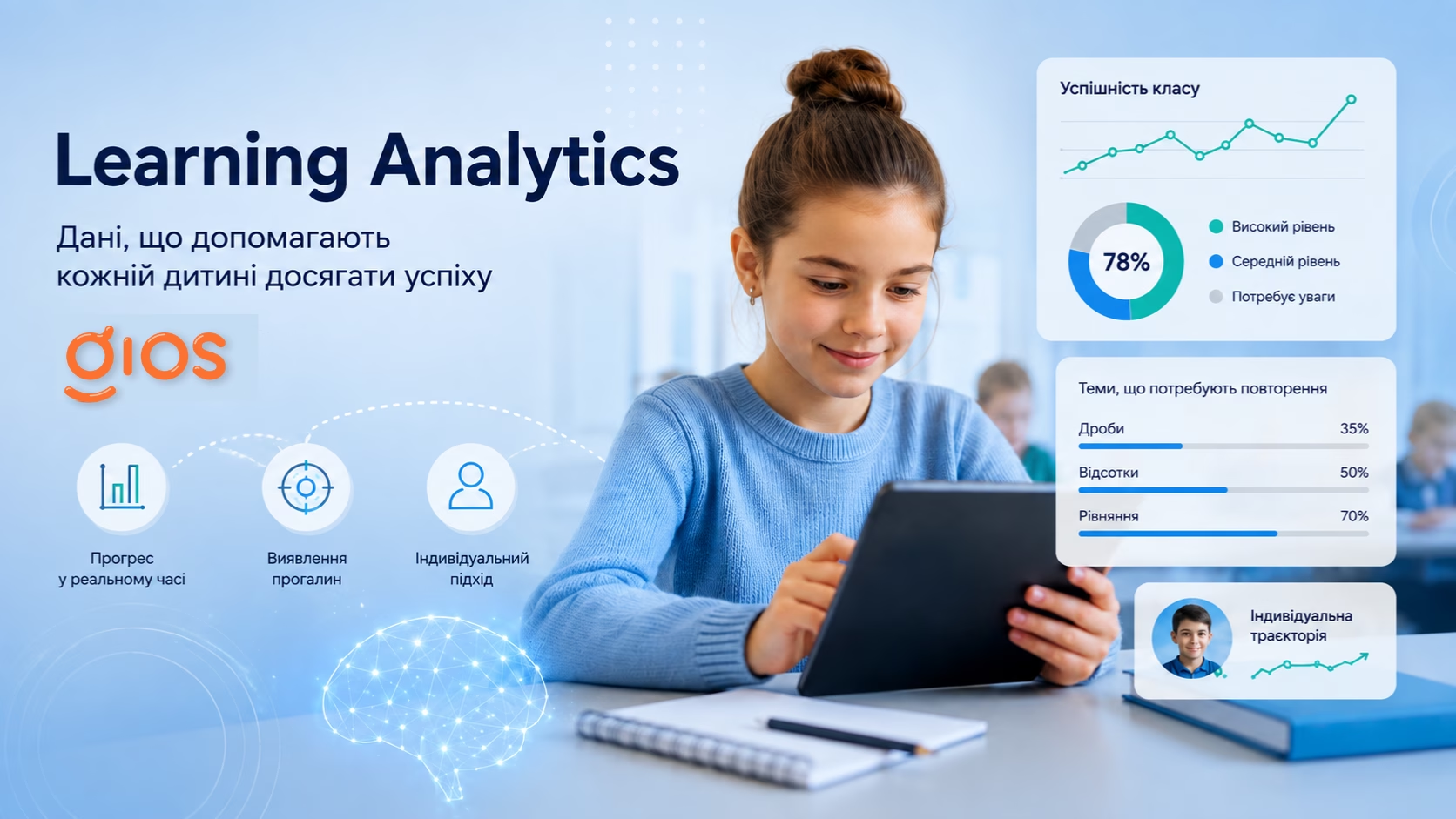
This is Learning Analytics.
Simply put, it is a system that collects data about students’ learning and transforms it into meaningful insights for teachers, school leaders, and students themselves. Instead of relying on assumptions, schools can make decisions based on real evidence.
That is why organizations such as OECD and UNESCO consider educational data one of the key resources of modern education.
Today’s schools generate an enormous amount of information. Every completed assignment, quiz, or homework task leaves a digital footprint. In the past, this data was simply stored.
Today, it helps schools:
Recent studies show that Learning Analytics is increasingly being adopted worldwide to support personalized learning and assist teachers in improving student outcomes. At the same time, its successful implementation depends on thoughtful integration and proper teacher training.
Imagine a classroom with 30 students.
After completing a unit on fractions, a teacher can see which students received low scores.
However, traditional assessment does not reveal:
Learning Analytics provides these insights automatically.
Access to performance data across:
This enables school leaders to make educational decisions based on data rather than intuition.
At GIOS, Learning Analytics is not just a concept—it is an everyday teaching tool.
Schools using GIOS receive real-time insights into:
As a result, teachers spend less time analyzing data manually and more time supporting their students.
According to GIOS data, students using the platform improve their academic performance by an average of 43%, thanks to personalized learning, continuous feedback, and Learning Analytics.
Today, GIOS is used by:
The platform also includes more than 12,000 interactive learning activities, creating a rich dataset that enables meaningful educational analytics and continuous improvement.
Conclusion
Education is gradually moving away from the one-size-fits-all approach.
Instead, schools are embracing learning models that recognize the individual progress, pace, and needs of every student.
Learning Analytics is one of the key technologies driving this transformation. It helps teachers teach more effectively, supports students in reaching their potential, and enables school leaders to make better decisions based on evidence rather than assumptions.